AI Based Covid Detection using CT Scans - Matlab Deep Learning Projects
Detect COVID-19 with AI using CT scan images and Matlab deep learning! Explore our projects for accurate diagnosis & improve healthcare outcomes. Learn more ...
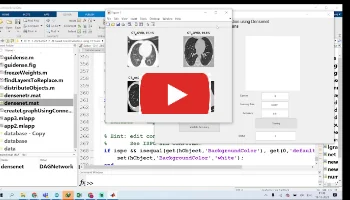
Project Methodology & Algorithm Details
AI-based COVID-19 detection using CT scans has become a significant area of research and application in the medical field. This approach leverages machine learning algorithms, particularly deep learning models, to analyze CT scan images and identify features indicative of COVID-19 infection. Here’s an overview of the key aspects and advancements in this technology:
How AI-based Detection Works
-
Data Collection:
- Large datasets of CT scans are collected, including scans from patients diagnosed with COVID-19, those with other types of pneumonia, and healthy individuals.
-
Preprocessing:
- Images are preprocessed to standardize sizes, remove noise, and enhance relevant features. Techniques like image normalization, contrast adjustment, and segmentation are used.
-
Model Training:
- Deep learning models, such as convolutional neural networks (CNNs), are trained on the preprocessed datasets. These models learn to identify patterns and features associated with COVID-19.
- Training involves feeding the model labeled data (i.e., images with known diagnoses) and adjusting model parameters to minimize error in predictions.
-
Feature Extraction:
- The trained models extract features from the CT scans that are indicative of COVID-19, such as ground-glass opacities, consolidation, and other lung abnormalities.
-
Classification and Diagnosis:
- The AI system classifies new CT scans into categories (e.g., COVID-19 positive, non-COVID pneumonia, healthy) based on the learned features.
- Some systems also provide a probability score indicating the likelihood of COVID-19 infection.
Benefits of AI-Based COVID Detection
-
Speed and Efficiency:
- AI models can analyze CT scans rapidly, providing results much faster than manual interpretation by radiologists.
-
Accuracy:
- Studies have shown that AI models can achieve high accuracy, sometimes comparable to or exceeding that of experienced radiologists.
-
Scalability:
- AI systems can handle large volumes of scans, which is particularly useful during pandemics when healthcare systems are overwhelmed.
-
Consistency:
- Unlike human interpretation, AI models provide consistent results, reducing variability and potential diagnostic errors.
Challenges and Considerations
-
Data Quality and Diversity:
- The performance of AI models depends heavily on the quality and diversity of the training data. Biased or limited datasets can lead to inaccurate predictions.
-
Interpretability:
- AI models, especially deep learning ones, are often seen as "black boxes." Understanding the decision-making process of these models is crucial for clinical acceptance.
-
Integration into Clinical Workflow:
- Effective integration of AI tools into existing clinical workflows is necessary to ensure they complement rather than disrupt healthcare processes.
-
Regulatory and Ethical Issues:
- Ensuring patient data privacy and meeting regulatory standards for medical devices are essential for deploying AI-based diagnostic tools.
Recent Advances and Applications
-
Hybrid Models:
- Combining AI with traditional diagnostic methods to enhance overall accuracy and reliability.
-
Real-time Diagnosis:
- Developing systems capable of providing real-time analysis and feedback during CT scans.
-
Global Collaborative Platforms:
- Initiatives like the Radiological Society of North America (RSNA) COVID-19 AI Initiative, which promotes the sharing of data and models to improve AI tools globally.
-
Portable Solutions:
- Implementing AI in portable devices for use in remote or underserved areas, where access to advanced radiology infrastructure is limited.
Need the Complete Source Code & Report for This Project?
Get fully documented code, dataset, and step-by-step guidance before your academic deadline.
Customize This Project
Direct review by PhD Lead Engineer
Related Project Demos

Need Custom Engineering Code?
Our PhD engineers provide complete MATLAB/Simulink projects with verified test cases and IEEE reports.
Order Project Solution →